One piece of furniture roughly doubled the nightly rate of our tiniest studio: a Murphy bed. The bed itself cost about $2,000 and pushed the nightly rate from roughly $90 to nearly $180. By turning a single room into two usable spaces, a real sitting room by day, a comfortable bedroom by night. It made a cramped unit feel generous and flexible, and guests paid more for it. Here's why it worked, and the lighting that made the flexible space feel intentional.
The Problem With a Tiny Studio
Our smallest studio had a real constraint: fit a bed and a sitting area into one small room. And it felt like a bedroom with a chair crammed in the corner, not somewhere you'd want to spend a few days. A permanently-out bed dominates a studio and makes it read as smaller and less functional than it is. We needed the room to be two things at once.
Enter the Murphy Bed
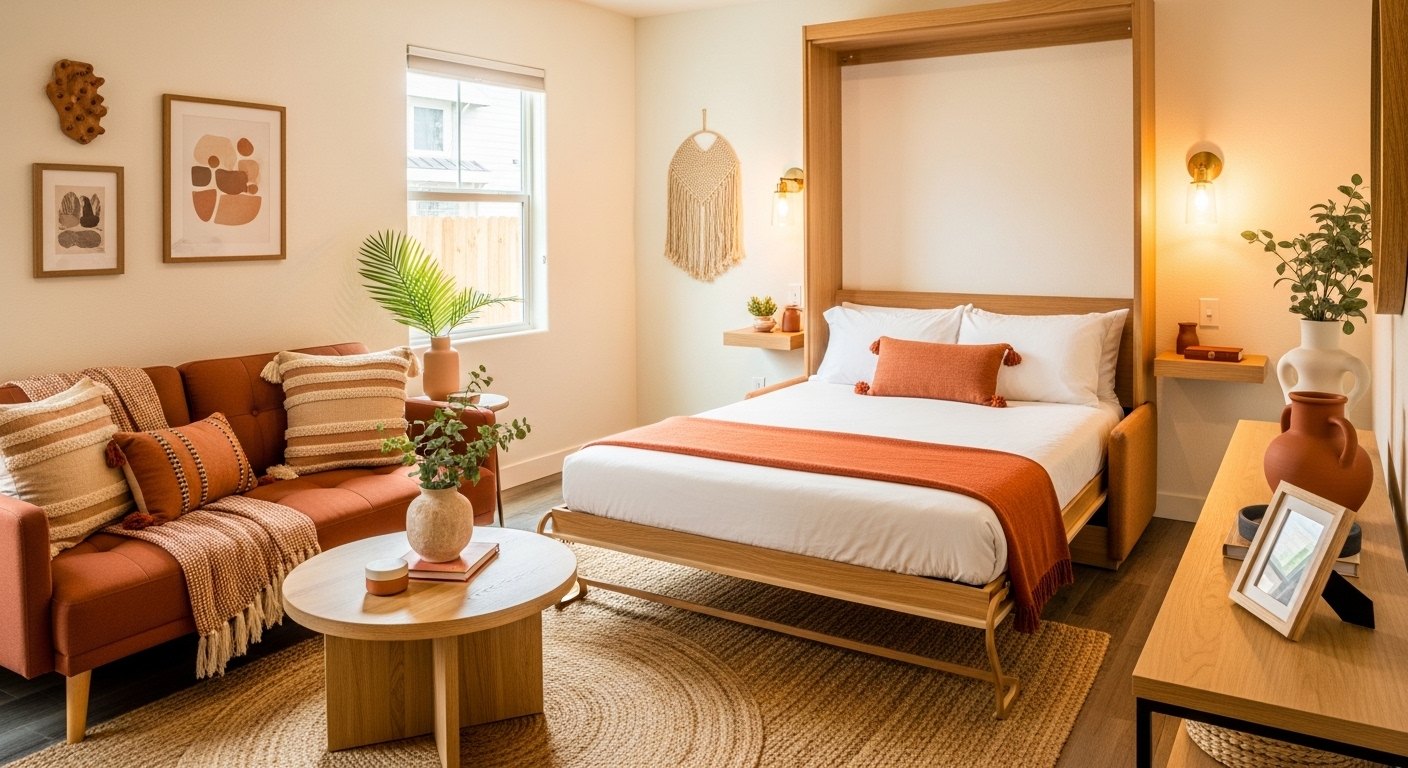
A Murphy bed folds up into the wall, so by day the room is a genuine sitting room and by night it's a comfortable bedroom. That single change turned one cramped room into two usable spaces. Suddenly the listing showed a real living area and a real bedroom, the unit felt twice as big, and we could position it, and price it, as a flexible, well-designed studio rather than a tiny bedroom.
Quality Mechanism, Real Mattress
A Murphy bed only works if it's done well. We invested in a quality, easy-to-operate mechanism and a real, comfortable mattress, not the thin foam pad that gives Murphy beds a bad name. Guests like a good Murphy bed and resent a flimsy one, so the mechanism and the mattress are where the budget has to go. A solid one signals a thoughtfully designed space.
Lighting for Two Modes
The lighting had to work in both layouts, which is where wall-mounted fixtures shine. We flanked where the bed folds down with plug-in sconces and small wall lamps that serve as accent lights by day and bedside reading lights at night. Because they're on the wall, they stay clear of the folding bed and work in both modes. And being plug-in, they needed no rewiring.
Zone It With Light and Rugs
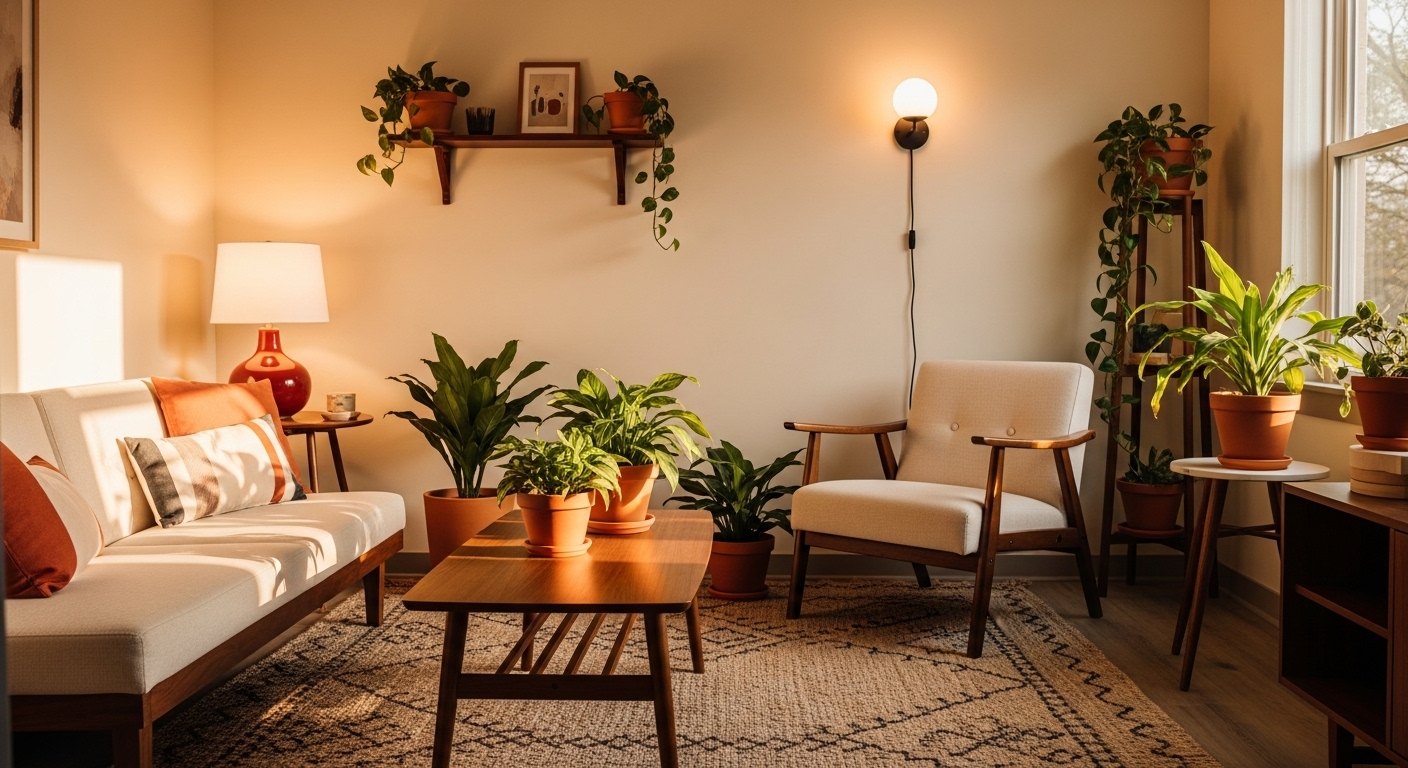
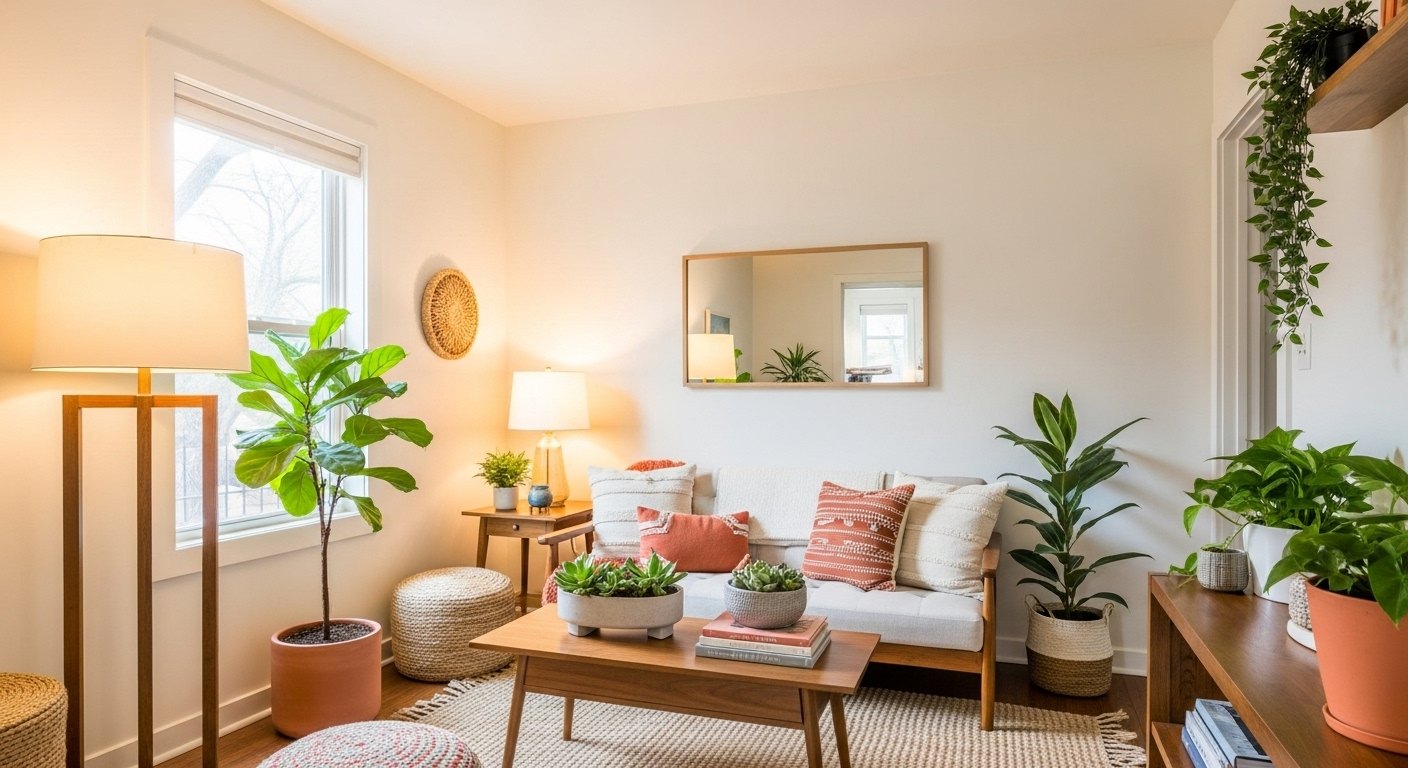
To sell the two-rooms-in-one feeling, we zoned the space with a rug under the sitting area and warm lighting that defines each function. When the bed is up, the warm sconces and a lamp make the sitting zone feel like a proper little living room; when it's down, the same sconces become bedside lights. Lighting and a rug do the zoning a wall can't in a studio.
Photograph Both Layouts
In the listing, we show both modes. The daytime sitting room and the nighttime bedroom. So guests immediately grasp the flexibility and the space. Photographing both layouts is what communicates the value of a Murphy bed; a guest scrolling sees two rooms for the price of one tiny one, which is exactly the impression that supports the higher rate.
The Rate Followed
Because the studio now read as a flexible, well-designed space with a real living area and a real bed, we could price it well above what a one-room bedroom would command. And it stayed booked. The Murphy bed paid for itself fast. In a small rental, the right multi-functional piece, well-built, well-lit, and well-photographed, is one of the best investments you can make.
When It's Worth It
A Murphy bed isn't right for every unit, but in a studio or small one-room rental where space is the constraint, it can transform both the guest experience and the economics. Buy a quality mechanism and a real mattress, light it for both modes with wall-mounted fixtures, photograph both layouts. And a tiny studio can earn like a much bigger unit.
Shop this post: plug-in wall sconces and small wall lamps