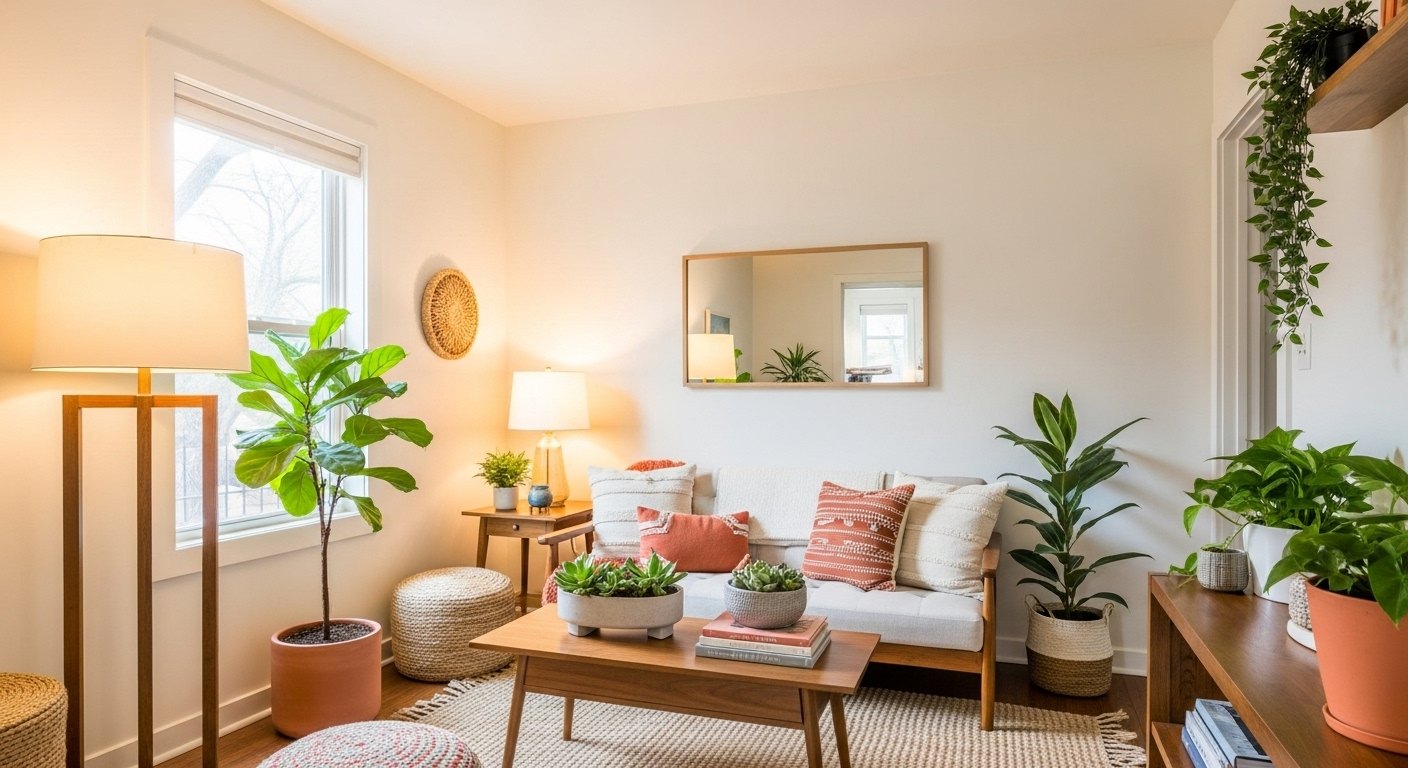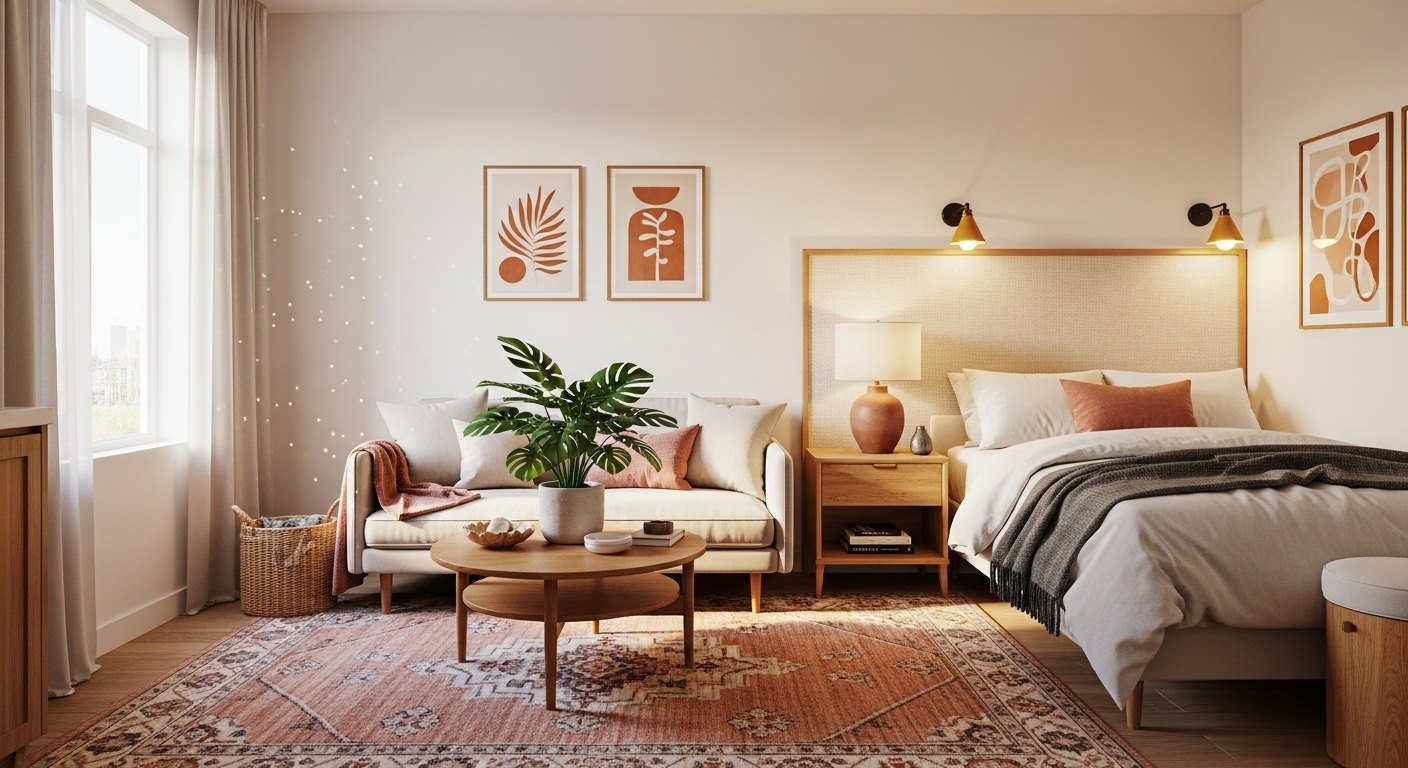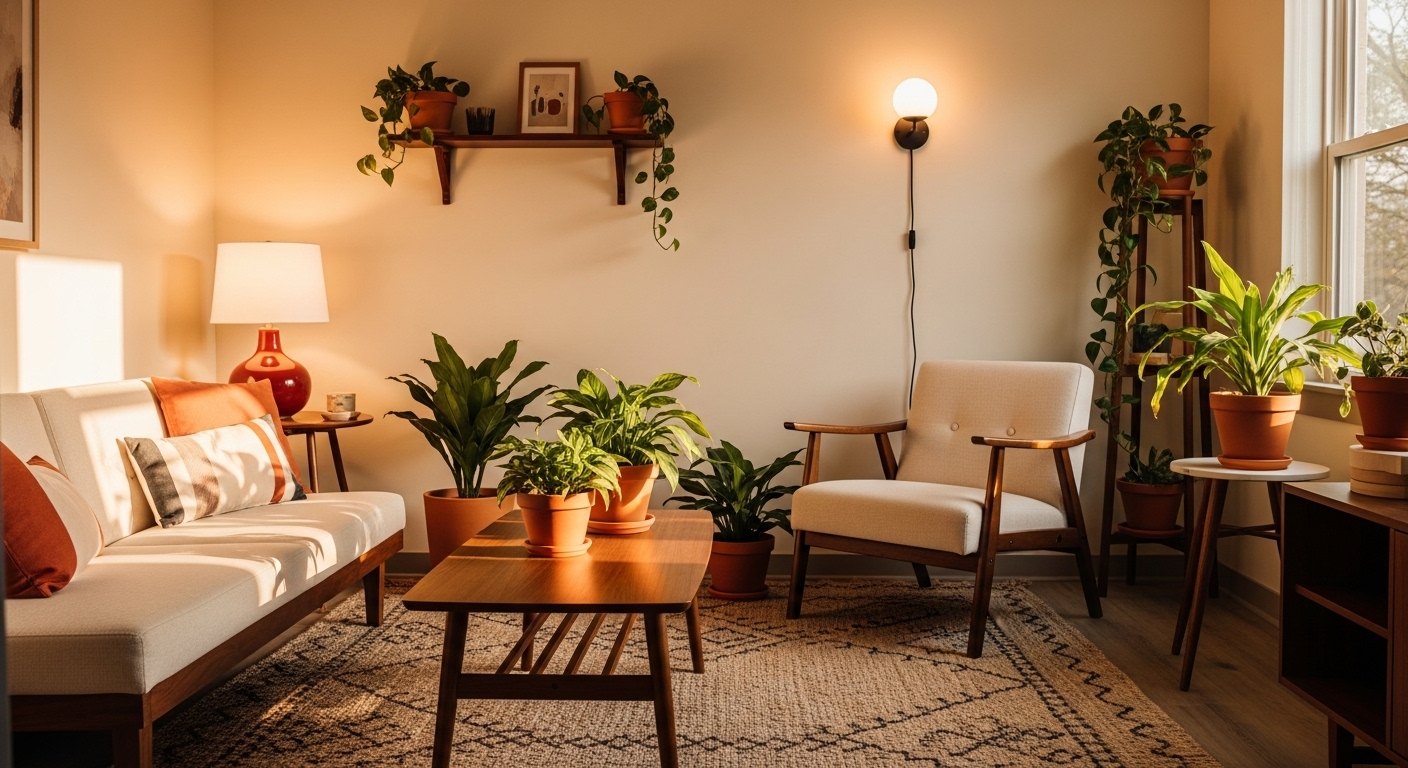
Our first flip was a dated little one-bedroom apartment in east Austin, beige everything, a sad builder boob-light in every room, and carpet we'd rather not describe. We bought it nervous, renovated it on a tight budget, and listed it as a short-term rental. It booked out almost immediately. Here's the honest before-and-after, what we spent, and the changes that actually moved the needle.
The Before: Beige and Builder-Grade
The apartment wasn't damaged, just dated and joyless, flat beige walls, worn carpet, a tired kitchen. And harsh cool-white overhead fixtures that made every room feel like a waiting room. Crucially, the bones were fine. That's exactly what you want in a flip: a cosmetically dated space, not a structurally broken one. We didn't need to gut anything; we needed to make it warm, clean, and photogenic.
Lighting Did the Heavy Lifting
The single highest-impact change was the lighting. We swapped every cool-white builder fixture for warm 2700K bulbs, hung a soft pendant over the dining spot, and added plug-in wall sconces by the bed and beside the sofa. In a rental you often can't rewire, and plug-in sconces solve that completely. They add the warm, layered, eye-level light that makes a space feel like a boutique hotel rather than a budget flat, with zero electrical work.
Paint and the Power of Warm White
We painted everything a warm off-white, which instantly lifted the rooms and gave the warm lighting a clean canvas to glow against. Paint is the cheapest transformation there is, and a warm white photographs beautifully and suits any guest's taste. We saved the one accent wall, a soft clay, for the bedroom, where it reads cozy in photos.
Floors That Survive Guests
Out went the carpet, in went a durable luxury vinyl plank in a warm oak tone, hard-wearing, easy to clean between guests, and far more photogenic than tired carpet. In a short-term rental, flooring has to survive a lot of feet and the occasional spilled glass of wine, so durability matters as much as looks. LVP hit both.
The Kitchen, Refreshed Not Replaced
We didn't replace the kitchen, we refreshed it. Painted the cabinets, swapped the hardware for warm brass, added a simple backsplash, and put two warm pendants over the counter. A refreshed kitchen photographs as good as new for a fraction of the cost, and guests care far more about clean and warm than brand-new.
Furnishing for Photos and Comfort
We furnished simply and warmly, a comfortable sofa, a real bed (guests notice a good mattress), warm wood and a few plants, and lamps everywhere. The goal was a space that photographs beautifully for the listing and feels good to stay in. Those two goals usually align: warm, layered, lived-in spaces both photograph well and earn five stars.
What It Cost
The whole flip, paint, lighting, flooring, kitchen refresh, hardware, and furnishing, came in at a few thousand dollars rather than the tens of thousands a gut renovation would have cost. Because we focused on high-impact, low-disruption changes, almost every dollar went somewhere a guest would see and feel. That's the budget-flip philosophy in one line: spend where it shows.
What Moved the Needle
Looking back, the changes that mattered most were the cheapest: warm lighting, warm paint, and good styling. The flooring and kitchen refresh were the bigger spends, but the lighting and paint did the most per dollar to turn a beige flat into a place people wanted to book. We've repeated that exact playbook on every flip since.
What We'd Do Differently
We'd have bought the plug-in sconces first, not last, for the first set of listing photos the rooms still felt a little flat. And the day the warm eye-level light went in, the whole apartment looked twice as inviting. Lighting first is the lesson we carried into every flip after this one.
Shop this post: plug-in wall sconces and modern pendant lighting