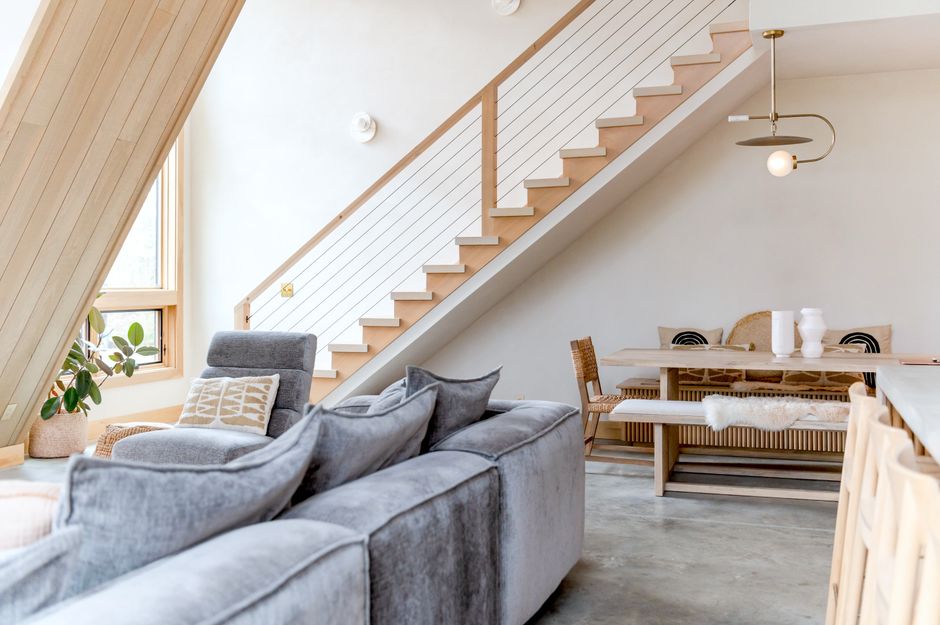
We made a lot of expensive mistakes on our first unit. Velvet sofa that stained in month two. A chandelier that looked incredible in the listing photos and then a guest walked into it. Art we loved that turned out to be extremely polarising — one five-star review mentioned "interesting art choices" in a way that was clearly not a compliment.
Four years and twelve units later, we have an actual design system. It's not glamorous. It's basically a checklist that lets us furnish a 700-square-foot Austin apartment in about three days and have it ready to photograph by Thursday. Here's the thinking behind it.
Design for the Photograph First, the Guest Second
This sounds cynical and it isn't. A guest who clicks past your listing never becomes a guest. The listing photos are the product. If the living room doesn't look warm and considered in a wide-angle photo taken at 5 p.m. with natural light, you will not fill your calendar regardless of how comfortable the sofa is.
What photographs well: warm neutrals, texture contrast, a single strong accent colour used sparingly, plants or fresh flowers on the day of the shoot, layered lighting. What photographs badly: dark feature walls, busy patterns, mixed metal finishes that look chaotic at scale, bare overhead bulbs, overhead fluorescents left on during the shoot.
We repainted Unit 4 in the first month because the original "Agreeable Gray" photographed as a kind of corpse-blue in our lighting conditions. Warm whites — Swiss Coffee, Alabaster, Navajo White — photograph better consistently in interior shots taken in Austin apartments, which tend to face west and catch yellow afternoon light.
The Lighting Rule We Don't Break
No overhead fluorescents in the photos. Ever. Warm lamp light only for listing shots, always on a dimmer, always 2700K bulbs. In every unit we install at least four floor or table lamps so we have options on shoot day.
In the living room of most units, we put plug-in wall sconces on either side of the sofa or TV wall. They're quick to install, no electrician needed, and they completely change how the room reads in photos. We use the BO-HA plug-in sconce in brushed brass in most units — it works with warm neutrals and it photographs as "nice hotel room" rather than "furnished apartment." That's exactly the register we want.
The statement lighting post goes into more detail on which fixtures actually drive bookings, if you want the full breakdown.
Furniture: Durable First, Attractive Second
We learned this from Unit 1's velvet sofa. The sofa is the highest-use piece of furniture in any short-term rental. It gets sat on by strangers, every day, with food and drinks and laptops and sometimes shoes. Boucle looks incredible in photos and is a cleaning nightmare. Velvet is worse. Performance fabrics in warm grey or oat tones are what we use now. Our current favourite is a tight-weave polyester that reads as linen in photos and wipes clean with a damp cloth.
Coffee tables: concrete, marble, or sealed wood. Not glass. Glass shows fingerprints in photos and chips when guests drop things on it. We put glass tops in Unit 3 because they photographed well and replaced three of them in six months.
The Accent Colour Question
One accent colour per unit. Carried through throw pillows, a piece of art, and one plant pot. That's it. We don't mix accent colours. The brain processes a single accent as "intentional." Two accents become "eclectic." Three become "chaotic."
Our current palette across the Austin portfolio: warm terracotta, sage green, or dusty blue. Each unit picks one. The backbone of warm white walls and natural wood furniture stays constant; only the accent changes. This is why all twelve units photograph differently but all feel like they belong to the same aesthetic family. Guests who book one unit and come back often book another. They know what they're getting.
What We've Stopped Spending Money On
Art over $150 per piece. It doesn't move the needle on bookings and it walks out of the door. We buy original prints from local Austin artists through the First Thursday gallery walk, budget $60 to $80 each, and replace the ones that go missing without much grief.
Decorative objects on open shelves. They get moved, knocked over, and broken. We style for the shoot and then remove most of it before guests arrive. Open shelves hold practical items only: a cookbook, a candle, a small plant.
Name-brand kitchen appliances. Guests don't care if it's a Smeg or a Hamilton Beach. They care if the coffee makes. Same coffee, different machine, save $200.
The Detail Guests Actually Remember
Theo thinks it's the mattress quality. He is right but I'm not letting him have the whole post. What guests mention consistently in reviews, beyond the bed, is the smell and the lighting when they arrive. The unit should smell like nothing — not cleaning products, not air freshener, not previous guests. Just nothing. And the entry light should be on when they arrive, warm, at a low-medium dim. We programme a smart plug to turn on the living room lamp thirty minutes before the check-in window opens.
That's it. Warm light and no smell. The rest is furniture.