The best Airbnb host tips we can give you come down to this: guests pay for sleep, cleanliness, and not being confused, and almost everything else is decoration. We learned that the expensive way. Our first unit, a 540-square-foot one-bedroom off South Lamar, ran at 45 percent occupancy for its first four months and got a 3-star review in week two for a lockbox that stuck in the cold. By the end of that first year we were above 70 percent and the review average had settled at 4.9, where it has stayed across seven units and something like 800 guests since. This post is the list of what changed, in the order we'd do it again, with the numbers we have.
It is long. We'd rather give you one honest post than five thin ones. If you only read one section, read the one about the first month, because that's where most new hosts quietly lose the year.
What should a new Airbnb host do before the listing goes live?
Get the sleep right before anything else. We put a $340 mattress in that first unit because the budget was tight and the sofa had already cost more than planned. Three of our first ten reviews mentioned the bed. Not the light, not the art, not the welcome basket. The bed. We swapped it for a $780 medium-firm hybrid in month five and the bedroom comments flipped inside a fortnight. If you're choosing between a better mattress and literally anything decorative, it is not a choice.
Blackout curtains are the second half of sleep and they cost us $38 a window. Austin sun comes up hard, and a guest who's woken at 6:40 am is a guest who writes the review tired. Put a cheap door draft stopper in too, especially in older buildings with a hallway that echoes.
Then walk in as a stranger. Literally: leave, lock up, and come back with a suitcase at 9 pm using only your own check-in instructions. We did this for unit one only after the lockbox review, and the walk showed us that our instructions said "the grey box by the door" when there were two grey boxes, one belonging to a neighbour. The fix was one photo added to the message and a $26 warm porch light on a dusk sensor so guests could see the keypad. Do the walk before your first guest, not after.
Finally, photograph the space the way it will be lived in, not staged into something it isn't. We wrote a whole post on photographing a rental for bookings, but the short version is: shoot at 4 pm with every lamp on, straighten the bed, and don't hide the radiator. A listing that oversells buys you a booking and a bad review in one transaction.
What do the first 30 days teach you that no guide does?
That your calendar will be empty and you'll panic. Ours was. New listings get a small visibility boost from Airbnb, and we wasted ours by pricing at what the neighbourhood's best-reviewed listing charged. Nobody books an unreviewed unit at the same price as a 200-review one. We dropped to about 20 percent under the comparable set for the first three weeks, took eleven bookings, and got nine reviews out of them. Then we moved the rate up in $10 steps. That first cluster of reviews is worth more than the $400 or so we gave up.
The other thing nobody tells you is how much you'll be on your phone. In month one we answered messages within about 40 minutes on average and it felt like a full-time job, because it was. Saved replies fixed most of it. We have eleven now: pre-booking questions, check-in the morning of, a "how's everything" at 7 pm on night one, checkout the night before, and a handful for the wifi, the parking, and the coffee machine. Response time is a ranking factor inside Airbnb's search, and guests mention fast replies in reviews more than they mention the sofa.
Set your cleaning system up in month one as well, even if you're cleaning it yourself. We didn't. We cleaned by memory for six weeks and missed the same things twice: the inside of the microwave and the top of the fridge. A guest found both. We now run a printed 44-line checklist that Rosa, who has cleaned for us since unit two, signs and photographs at the end of every turnover. The whole system is in our turnover post. A checklist feels like overkill until the day it isn't.
Which Airbnb hosting tips actually move reviews?
We pulled every review across seven units and counted what guests actually praised. Roughly in order: cleanliness, the bed, "felt cozy" or "great lighting", easy check-in, fast communication, good coffee, water pressure. Nobody has ever praised our throw pillows. Here is what we do about each one.
Cleanliness we've covered. It's the floor, not the ceiling. One slip costs you a star and a paragraph.
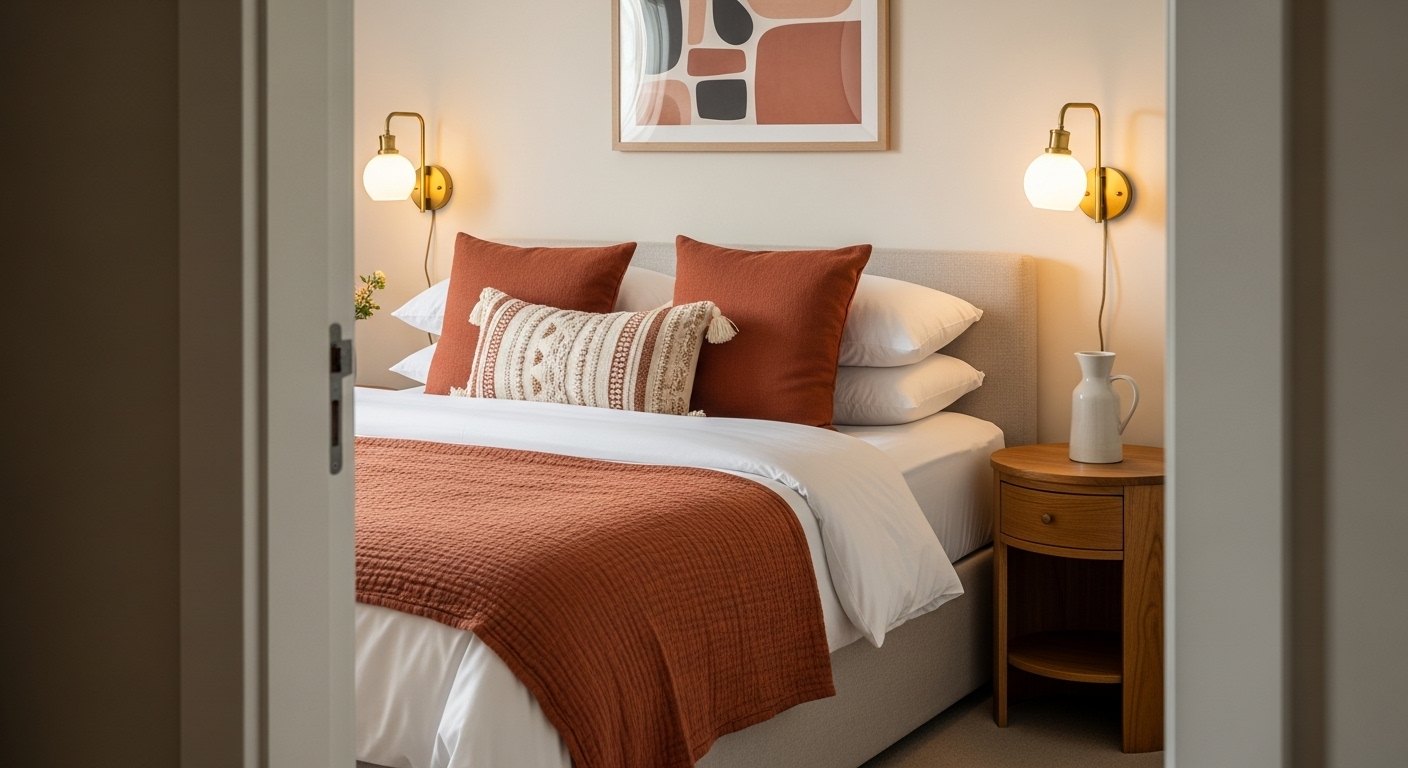
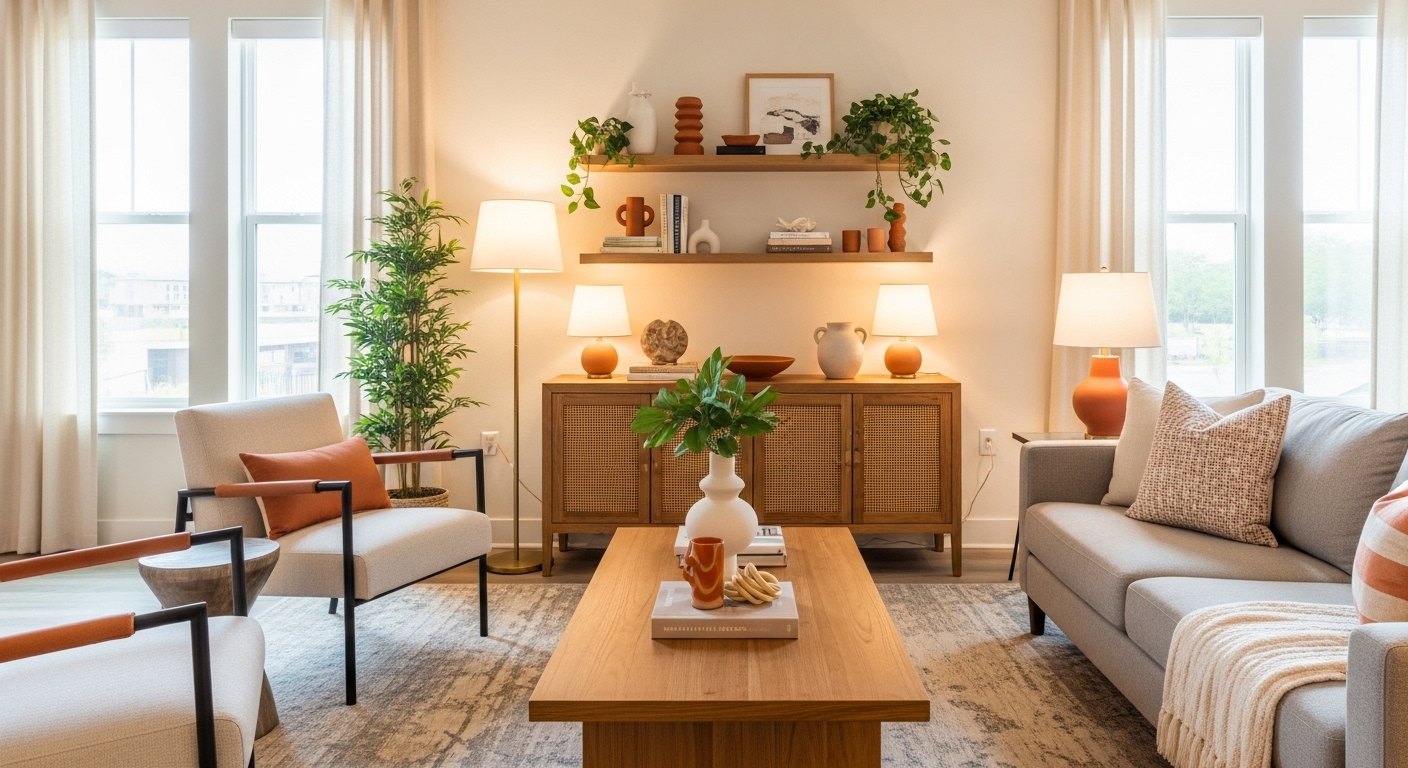
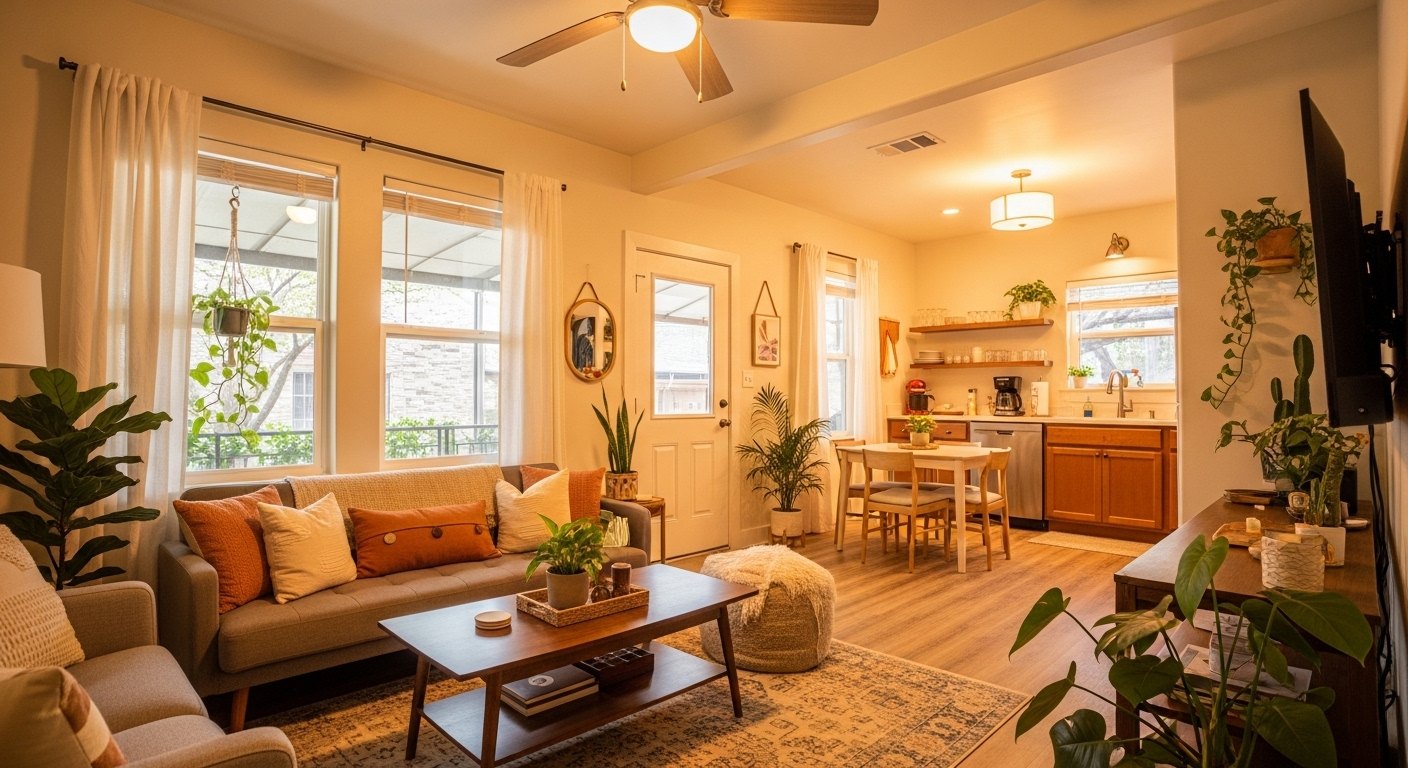
Cozy is a lighting problem, and it's the thing most new hosts get wrong because they photograph in daylight and never see the unit at 9 pm the way a guest does. Overhead lights off, lamps on, everything at 2700K. In a rental you often can't rewire, so most of ours is plug-in: a plug-in wall sconce either side of the bed, a swag pendant over the table on a hook, a floor lamp behind the sofa. We've written about rental-friendly lighting without rewiring in more detail. The whole lighting spend on a one-bedroom is under $400 and it's the most-mentioned thing in our reviews after the bed. Also, put every lamp on the same switch or a smart plug so a tired guest doesn't have to hunt for six switches.
Coffee: buy a machine you'd use, not the cheapest one, and leave real beans or good pods. It costs us about $9 a stay and shows up in maybe one review in eight. Water pressure is worth a $22 shower head. Wifi should be tested at the bed, not by the router, and the password should be printed and on the fridge and in the app.
Where should a first-year host spend money, and where should they not?
Spend on the mattress, the linens, the lighting, and the shower head, in that order. Spend on a second full set of linens per bed so a turnover never waits on the dryer. Spend on a good vacuum for whoever cleans.
Don't spend on art you'd be sad to lose, on rugs that can't be washed, on anything glass on a low surface, or on a smart TV setup that needs an instruction sheet. Don't buy the enormous welcome basket. Guests like the gesture but they do not review it, and the cost adds up across a hundred stays. Our first unit had a $19 basket per stay. Now it's local coffee, two bottles of water, and a handwritten card, about $6.
The most expensive mistake in our first year wasn't furniture, it was a rug. A $310 wool rug in the living room, lovely, ruined by a spilled glass of red in month three. Everything soft in our units is now machine-washable or under $80. We've written a whole post about materials that survive guests, and the numbers behind our pet-friendly decision come from the same lesson.
How should a new host set the nightly rate and the cleaning fee?
Dynamically, and lower than your ego wants. We use a pricing tool now, but for the first six months we did it by hand every Sunday: look at ten comparable listings within a mile, note what's booked and what isn't for the coming two weeks, and price ours just under the middle of the ones that are booking. Austin swings hard with SXSW, ACL, UT football and the F1 weekend, and the difference between a flat rate and a managed one on our seven units is somewhere around $11,000 a year. Our pricing and turnover post has the full cost stack.
Set the cleaning fee below what the clean costs you and put the rest in the rate. That sounds backwards. It isn't. Since Airbnb started showing total price in search, a $95 cleaning fee on a two-night stay reads as a 30 percent surcharge and kills weekend bookings. We charge $65 on a studio and $110 on a two-bedroom, pay Rosa more than that, and make it up on the nightly. The reasoning is in our cleaning fee post. Set a two-night minimum from day one; one-night stays generate a full turnover for half the income.
What is the Airbnb host checklist we run for every new unit now?
This is the actual list, in the order we do it, refined across seven setups. It lives in a shared note and takes about two weeks of evenings after the renovation is done.
Week one: mattress and two full linen sets per bed. Blackout curtains. Plug-in lighting at the bed, the table, and the sofa, all warm white. Shower head, bath mat, two towels per guest plus one spare set. Wifi tested at the bed. Coffee machine, kettle, basic pantry (salt, oil, sugar, tea). Full kitchen check against our kitchen essentials list. Smoke and CO detectors, fire extinguisher, first aid kit. Lockbox or smart lock with a backup key hidden and photographed.
Week two: the stranger walk at night. Photography at 4 pm with lamps on. Listing copy written straight, including the one thing that isn't great (the street noise on unit three, the narrow stairs on unit five). Saved replies loaded. Printed house guide on the counter: wifi, checkout steps, parking, trash day, three restaurants within walking distance. Cleaning checklist printed and walked through with Rosa in the unit. Pricing set 20 percent under comps for the first three weeks. City short-term rental licence confirmed and the number on the listing. Insurance rider in place, because a standard renters or homeowners policy does not cover paying guests.
Our fuller setup checklist breaks this down room by room if you want the long version.
What are the Airbnb hosting mistakes we'd tell a beginner to skip?
Pricing at the top of the market with zero reviews. Photographing in daylight and never seeing the unit at night. Buying a cheap mattress to protect the budget. Cleaning from memory. Hiding the unit's flaw instead of naming it in the listing. Skipping the insurance rider. Answering messages when convenient instead of within the hour. Charging a cleaning fee that covers the clean. Leaving one-night stays open. Treating reviews as verdicts instead of free product feedback.
We made eight of those ten in year one. The two we didn't make, honest listing copy and the insurance rider, are the two we'd argue hardest for, because they're the ones that can end the business rather than dent it.
How do you handle a bad Airbnb review in your first year?
You will get one. Ours was the lockbox review, 3 stars, week two, and we read it about forty times. Two things helped. First, we replied publicly in three sentences: sorry, here's what we've already changed, thank you for telling us. Future guests read host replies far more carefully than they read the review itself, and a calm, specific reply does more for bookings than the star cost us. Second, we fixed the actual thing within 48 hours and mentioned the fix in the listing. The next eleven reviews were 5 stars, and the 3 dropped out of the visible average within a couple of months.
What not to do: argue, explain the guest's mistake, or ask them to change it. Airbnb rarely removes reviews unless they break a policy, and a defensive reply reads worse than the review. Treat every review, including the unfair ones, as a line item in the product feedback you'd otherwise pay for. About a third of the changes on our checklist came from a guest telling us something we didn't want to hear.
Is hosting worth it after the first year?
For us, yes, and not by a small margin, but only because we treat it as a business with systems rather than passive income. Our first unit grossed about $31,000 in its first twelve months at an average of $172 a night. Net of mortgage, cleaning, utilities, supplies, fees, insurance, the licence, and repairs, that was closer to $11,500. Year two, with the mattress, the lighting, the reviews, and dynamic pricing in place, the same unit grossed $44,000 and netted around $19,000. Nothing about the apartment changed. What changed was the hosting.
If you're starting out, spend your first year getting the fundamentals boring and reliable. Sleep, clean, light, communicate, price to the market. The clever extras can wait, and most of them can wait forever.
Shop this post: plug-in wall sconces, rechargeable wall sconces and swag pendant lights